
By Mel Gilcrist & Meg Brodtmann MW
Episode produced by Austin Khouri
We’ll be honest — when Queensland came up as a podcast topic, it wasn’t exactly met with confidence from Mel.
There was a fair degree of scepticism and expectation that this might be more “novelty” than genuinely good wine.
And then we tasted them. Tuchè, Meg. (It’s almost like the Master of Wine knows what she’s doing?!)
It ended up being one of the more surprising episodes we’ve recorded.
Can you actually grow wine in Queensland?
At face value, Queensland doesn’t make a lot of sense for wine.
Most of the world’s vineyards sit between roughly 30° and 50° latitude — far enough from the equator to experience cool seasons. That seasonal shift is critical because grapevines need a period of dormancy. Without it, the vine doesn’t properly reset, and quality suffers.
Queensland sits outside of that range, it shouldn’t work – so why does it?
The answer is altitude.
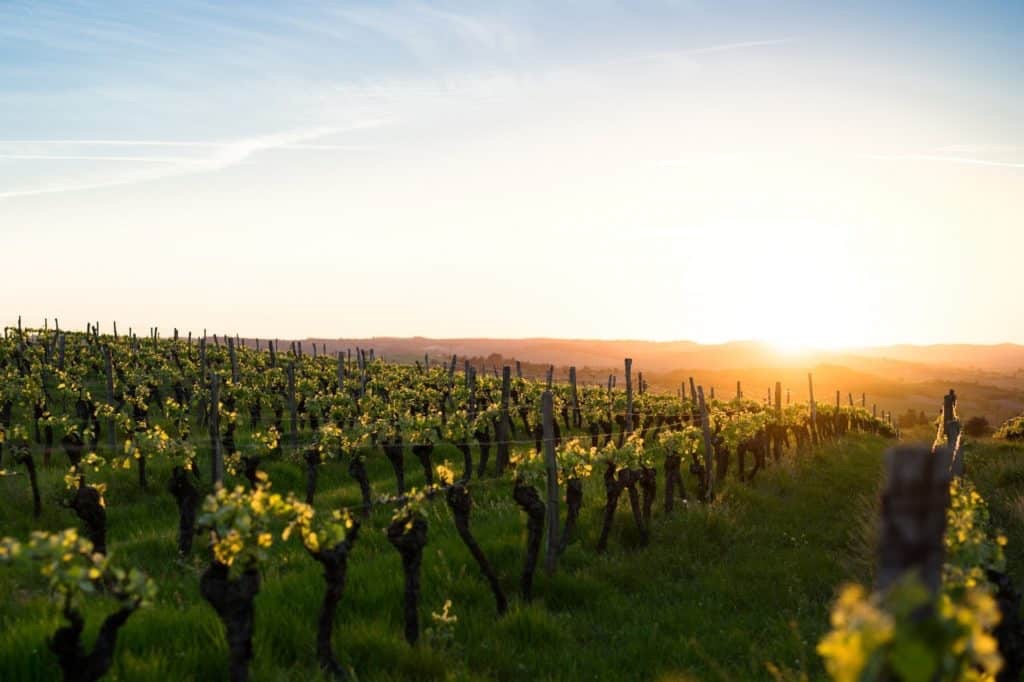
Regions like the Granite Belt sit up to 1,000 metres above sea level. That elevation brings cooler temperatures, especially at night, allowing vines to behave more like they would in traditionally cooler climates. It’s enough to trigger dormancy and support balanced ripening.
It’s still considered a warm climate region — but not in the way you might expect.
Why the Granite Belt matters
The Granite Belt, centred around Stanthorpe, is one of only two official wine regions (GIs) in Queensland, alongside South Burnett.
And it’s doing something interesting.
Rather than forcing traditional varieties into a climate that doesn’t quite suit them, producers are starting to lean into alternative grape varieties — ones better adapted to warmth, sunshine and long growing seasons.
That shift is where things start to get exciting.
The wines that changed our minds
We tasted four wines from the Granite Belt — and each one challenged expectations in a different way.
Vermentino — Golden Grove Estate
This was the first surprise.
Vermentino can often lean light and simple, but this had more going on. There was a tutti-fruity mix of peach, pineapple and citrus, but with a subtle texture that gave it weight through the palate.
It wasn’t just fresh — it was considered.
Food-wise, it immediately called for something like prawns, lobster or Moreton Bay bugs. That balance of fruit and texture makes it incredibly versatile.
Verdelho — Witches Falls Provenance 2024
If the Vermentino was seamless, this was more expressive.
There’s a clear tropical note — think pineapple — but what makes it interesting is the citrus edge running through it, especially a slightly bitter mandarin peel character on the finish.
That interplay between fruit and structure gives it energy. It’s not just fruity — it’s engaging.
For Sauvignon Blanc or Pinot Grigio drinkers, this feels like a natural next step.
Tempranillo (Joven style) — Golden Grove Estate 2024
This is where the conversation shifts.
Instead of heavy, oak-driven reds, this is a young, vibrant Tempranillo — what you’d call Joven style in Spain. Minimal oak, bottled early, designed for drinking rather than cellaring.
And it works.
Medium-bodied, bright red fruit, soft tannins — the kind of wine that doesn’t need food but handles it easily. It also sits comfortably in that increasingly important category of chillable reds, which makes perfect sense in a warm climate.
Saperavi (Qvevri) — La Petite Mort 2022
This was the wildcard — and arguably the standout.
Saperavi is a Georgian grape known for deep colour, high acidity and strong tannins. Pair that with fermentation in qvevri (traditional clay vessels), and expectations lean toward something intense and potentially aggressive.
Instead, this was controlled, structured and genuinely enjoyable.
Dark, brambly fruit. A brooding edge. But importantly, tannins that are present without being overwhelming.
It’s a confident wine — and a sign of seriously good winemaking.
Why Queensland shouldn’t copy traditional regions
Historically, Australian wine regions often leaned heavily on classic European varieties.
But Queensland is a good example of why that approach doesn’t always make sense.
The wines that stood out weren’t trying to be Burgundy or Bordeaux. They were:
- Vermentino
- Verdelho
- Tempranillo
- Saperavi
Varieties that make sense for the climate.
That shift — towards climate-appropriate grapes — feels like the real story here. It’s not about imitation. It’s about a region creating it’s own story.
The reality: these wines aren’t easy to find
One of the biggest challenges is access.
Many Queensland producers are small, and distribution is limited. A lot of these wines need to be sourced directly or ordered online — and even then, availability can be patchy.
But that scarcity also explains something else:
the quality is there because it has to be.
Small producers don’t have the margin for mediocrity.
Final verdict
Queensland wine might not be the first thing that comes to mind when you’re choosing a bottle.
But it probably deserves more attention than it gets.
The Granite Belt, in particular, is showing what can happen when a region leans into its strengths — altitude, climate and alternative varieties — rather than trying to replicate somewhere else.
We learnt this is a super exciting region worth following. We want to keep seeing great things!
Listen to the episode of Wine with Meg and Mel here:


Leave a Reply